
Crew Turnover Hit Hard Last Season. Here’s How to Avoid It This Year
Oceaneria Industry Report
By the Oceaneria Recruitment Team
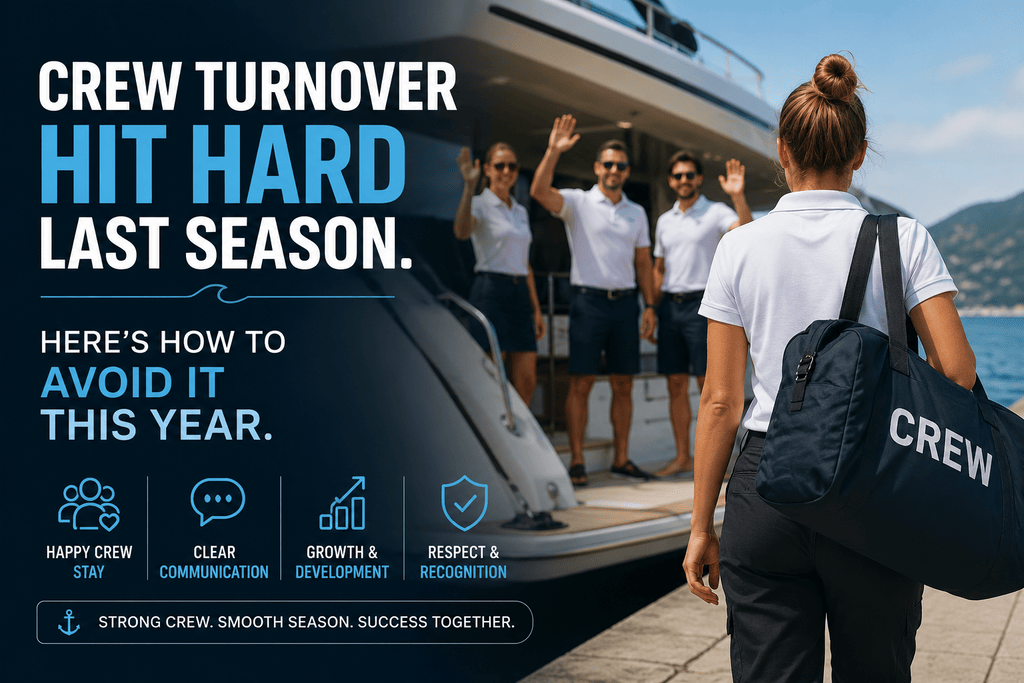
Crew turnover remains one of the biggest operational challenges facing the yachting industry.
While attention often focuses on recruitment shortages, many yachts are experiencing a different problem. Qualified crew are leaving positions sooner than expected, forcing captains, management companies, and owners to repeatedly restart the hiring process.
The result is increased recruitment costs, operational disruption, reduced continuity onboard, and additional pressure on the crew who remain.
Industry feedback throughout 2025 and early 2026 suggests that retention is becoming just as important as recruitment.
The yachts that keep good crew are often not the ones paying the highest salaries. They are the ones creating environments where crew want to stay.
What Industry Voices Are Saying
Across the industry, captains, crew managers, and recruiters continue to report similar themes behind resignations.
Crew frequently cite burnout, poor communication, unclear career progression, excessive workload, and mismatched expectations between the role advertised and the reality onboard.
Mental health initiatives led by organisations such as The International Seafarers' Welfare and Assistance Network (ISWAN) have also highlighted the growing importance of crew wellbeing, particularly during busy charter and cruising seasons.
Management companies increasingly recognise that replacing experienced crew is significantly more expensive than retaining them. Beyond recruitment fees, turnover creates knowledge loss, onboarding costs, safety risks, and disruptions to guest experience.
These observations point to a clear trend: retention is becoming a competitive advantage.
Analysis: Why Crew Leave
Salary matters, but it is rarely the only reason crew resign.
Most departures happen because of an accumulation of frustrations rather than a single event.
Common causes include:
✓ Unclear expectations before joining the yacht.
✓ Poor leadership and communication onboard.
✓ Limited opportunities for growth and training.
✓ Inconsistent work life balance, particularly during long seasons.
✓ Lack of recognition for strong performance.
✓ Cultural mismatches between crew, captain, management, and owners.
Many turnover issues actually begin during recruitment.
When a candidate accepts a role based on incomplete information, both parties are more likely to become dissatisfied once the season begins.
This is why accurate matching has become increasingly important. The goal is not simply filling a vacancy quickly. It is finding crew who are genuinely suited to the vessel, programme, culture, and expectations.
How Successful Yachts Improve Retention
The vessels that consistently retain crew tend to focus on a few key areas.
First, they invest time in recruitment.
Captains and managers clearly communicate expectations, rotation schedules, guest programmes, career opportunities, and onboard culture before contracts are signed.
Second, they prioritise leadership.
Crew are more likely to remain when communication is professional, feedback is constructive, and expectations are applied consistently across the vessel.
Third, they support development.
Training pathways, certification support, and opportunities to take on additional responsibility help crew see a future onboard rather than viewing the role as a temporary stepping stone.
Finally, they pay attention to wellbeing.
Adequate rest, realistic workloads, and a positive onboard culture continue to be among the strongest predictors of retention.
Lessons for the 2026 Season
The most expensive crew member is often the one who leaves.
Every resignation creates recruitment costs, onboarding time, operational disruption, and additional pressure on the remaining team.
Preventing turnover starts long before a crew member considers resigning.
It begins with transparent hiring, realistic expectations, strong leadership, and ongoing investment in people.
As yacht operations become more complex and competition for experienced crew remains strong, retention will increasingly separate high performing vessels from those that constantly struggle with vacancies.
Bottom Line for 2026
Crew turnover is not simply a staffing issue.
It is an operational issue.
The yachts that attract and retain strong crew create more stable operations, better guest experiences, and lower long term recruitment costs.
Finding crew is important.
Keeping them is where the real value lies.
For captains, managers, and owners preparing for the season ahead, the question is no longer just how to hire good crew.
It is how to give them a reason to stay.