
Heesen Unveils 72.3m Project Ananda, Signalling a Bigger Push Into Smart Custom Yacht Building
Oceaneria Industry Report
By the Oceaneria Recruitment Team
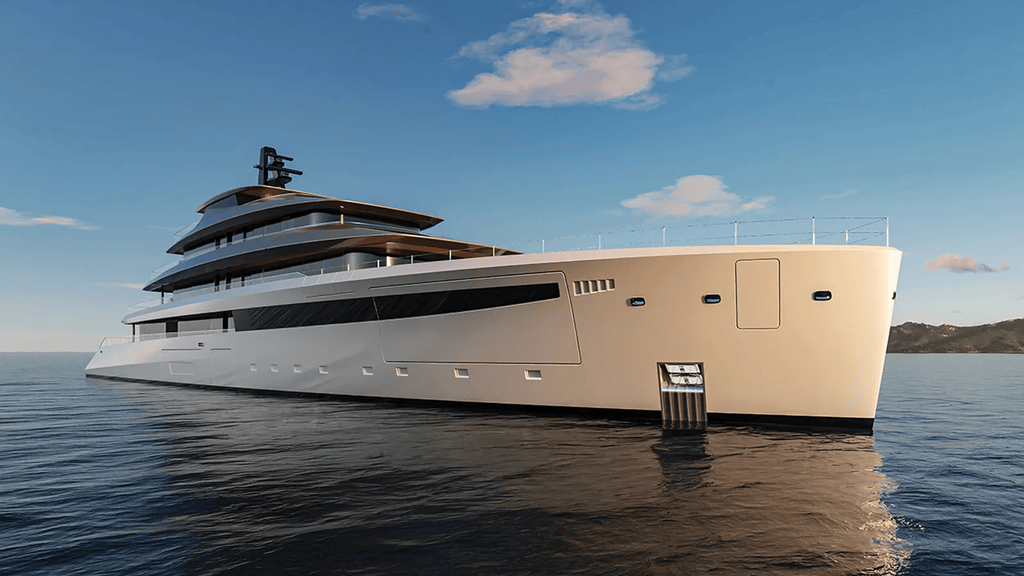
Dutch shipyard Heesen has unveiled Project Ananda, a 72.3 metre steel superyacht that will become the largest steel yacht ever built by the company.
At first glance, the announcement appears to be another milestone in the continuing trend towards larger and more sophisticated superyachts. However, when we look beyond the specifications, Project Ananda appears to represent something more significant.
At Oceaneria, we believe this project offers one of the clearest indications yet of Heesen's future direction under its new ownership, while also reflecting several broader trends shaping the superyacht industry.
The yacht's size may be making headlines, but the bigger story is why Heesen is building it this way.
More Than a New Yacht
Project Ananda arrives shortly after Dutch entrepreneur Laurens Last acquired Heesen in 2025.
Ownership changes often create shifts in strategy, investment priorities, and long term vision. While it is still early days, Ananda appears to provide an early glimpse into how Heesen intends to position itself in an increasingly competitive market.
Rather than focusing purely on traditional custom construction or standardised semi custom models, Heesen is continuing to develop its Smart Custom philosophy.
This approach aims to combine the individuality owners want with the efficiencies shipyards increasingly need.
That balance may become increasingly important as projects grow larger, more complex, and more expensive to deliver.
Why Smart Custom Matters
One of the most interesting aspects of Project Ananda is not its size but the platform it is built upon.
Traditionally, owners have faced two options.
The first is a fully custom yacht, designed from the ground up around specific requirements. The second is a semi custom yacht where owners can personalise selected elements while working within a more standardised platform.
Both approaches have advantages and disadvantages.
Fully custom projects provide maximum flexibility but can take years to develop and build. Semi custom yachts can reduce delivery times but may limit personalisation.
Heesen's Smart Custom model attempts to bridge that gap.
The engineering platform, hull development, naval architecture, and technical systems are already established. Owners can then customise large portions of the yacht while avoiding much of the development work associated with a completely bespoke project.
From an owner's perspective, this can reduce risk and shorten timelines.
From a shipyard perspective, it can improve efficiency and predictability.
As market conditions become more challenging, that combination may prove increasingly attractive.
A Sign of Where the Market Is Heading
The timing of this launch is notable.
Following several years of exceptionally strong demand, the superyacht market has entered a more measured phase. Buyers remain active, but decisions are taking longer and competition between shipyards has intensified.
In this environment, reducing the time between contract signing and delivery can become a competitive advantage.
Project Ananda suggests Heesen may be positioning itself to appeal to buyers who want a highly personalised yacht without committing to the lengthy development cycles often associated with fully custom projects.
If successful, this approach could influence how other shipyards think about future builds.
Heesen's Largest Steel Yacht Ever
At 72.3 metres and approximately 1,750 gross tonnes, Project Ananda becomes the largest steel yacht in Heesen's history.
The shipyard has already established itself as a leading builder of steel and aluminium yachts, with notable projects including Sparta and Lusine.
Ananda takes that progression a step further.
While the yacht is larger than previous Heesen steel builds, the decision to continue investing in steel construction is perhaps more interesting than the size itself.
Why Steel Remains Important
In an industry where lightweight materials and efficiency often dominate discussions, steel continues to play a vital role in large yacht construction.
The reason is simple.
As yachts increase in size, owners demand larger interior spaces, more guest accommodation, larger beach clubs, wellness facilities, and increasingly complex onboard amenities.
Steel provides the structural strength required to support those requirements.
While aluminium remains popular for performance focused yachts, steel remains the preferred choice for many vessels above 70 metres.
Project Ananda reinforces that reality.
The industry's largest and most ambitious projects still rely heavily on steel construction.
Wellness Has Become a Core Requirement
One of the most talked about features aboard Ananda is its dedicated wellness area.
The nearly 100 square metre spa and beach club includes a sauna, steam room, ice bath, snow shower, treatment room, hyperbaric chamber, and wellness bar.
A decade ago, these features would have been considered specialist additions.
Today, they are increasingly becoming standard expectations among ultra high net worth owners.
At Oceaneria, we see this as part of a broader shift in owner priorities.
Yachts are increasingly viewed as lifestyle platforms rather than simply luxury assets.
Health, recovery, fitness, and longevity are becoming central considerations during the design process.
Project Ananda reflects that evolution.
Hybrid Technology Continues to Move Into the Mainstream
The yacht will feature a hybrid propulsion system capable of supporting periods of quieter and more efficient operation.
Hybrid propulsion is no longer a niche technology within the superyacht market.
Instead, it is steadily becoming part of the mainstream conversation.
Owners increasingly expect lower noise levels, improved comfort, reduced fuel consumption, and greater operational flexibility.
As environmental regulations continue to evolve and owners place greater emphasis on efficiency, hybrid systems are likely to become even more common.
Project Ananda reinforces the direction the industry is already moving.
Privacy Is Becoming a Design Feature
One of the more subtle design features aboard Ananda may also be one of the most important.
Guests can board through a dedicated shell door and access a central glass elevator without passing through the yacht's primary entertainment spaces.
This design approach reflects changing expectations among high profile owners.
Privacy is no longer viewed simply as a security requirement.
It has become part of the ownership experience itself.
Designers are increasingly creating layouts that separate guest movements, crew operations, and social spaces.
Project Ananda demonstrates how these considerations are becoming integrated into yacht design from the earliest stages.
Flexibility Is Replacing Fixed Layouts
The yacht also features multiple owner suite configurations and a secondary master suite.
This reflects another trend that continues to gain momentum across the industry.
Owners want flexibility.
Yachts are used in different ways throughout their lifespan.
They may serve as family vessels, charter platforms, business entertainment spaces, or a combination of all three.
Layouts that can adapt to changing requirements provide long term value.
Project Ananda has clearly been designed with that flexibility in mind.
What This Means for Heesen
For Heesen, Project Ananda is much more than a new yacht.
It is a statement about where the company believes the market is heading.
The project combines larger scale steel construction, hybrid propulsion, wellness focused design, privacy driven layouts, and flexible ownership options.
Most importantly, it demonstrates Heesen's confidence in its Smart Custom strategy.
The company appears to be betting that owners increasingly want personalisation without the complexity and extended timelines of fully bespoke construction.
That is a trend worth watching.
The Oceaneria View
When we look at Project Ananda, we do not simply see Heesen's largest steel yacht.
We see a shipyard adapting to changing market conditions and evolving owner expectations.
We see a builder trying to solve one of the biggest challenges facing the industry: how to provide greater customisation without increasing complexity, cost, and delivery times.
We see wellness moving from a luxury feature to a design priority.
We see hybrid propulsion becoming increasingly mainstream.
We see privacy and flexibility becoming essential parts of modern yacht design.
Most importantly, we see a project that provides insight into how major shipyards may approach yacht construction over the next decade.
Whether Project Ananda ultimately becomes a benchmark for future projects remains to be seen.
What is already clear is that Heesen is using this yacht to communicate where it believes the future of superyacht building is heading.
That may prove to be the most important story behind Project Ananda.