
Lürssen Delivers Explorer Yacht O3 Following Multi-Year Build
Oceaneria Yacht Industry Report
By the Oceaneria Recruitment Team
Vessel Information
Builder: Lürssen
Vessel Name: O3
Previous Project Names: Project Icecap, Project Shackleton
Status: Delivered (2026)
IMO Number: 9865738
Flag: Marshall Islands
Length Overall (LOA): Approximately 109m*
Beam: 17.5m*
Draft: Approximately 4.5 to 4.6m
Gross Tonnage: Approximately 6,561 GT
Hull Material: Steel
Superstructure: Aluminium
Classification: Ice classed hull, reported by some sources as Ice Class 1B
Propulsion: Reported diesel electric propulsion with three Wärtsilä engines
Guests: Up to 20 guests (reported)
Crew: Approximately 30 crew (reported)
*Some AIS databases list O3 at 107m LOA and 18m beam. Most yacht industry databases report 109m LOA and 17.5m beam.
Introduction
Lürssen has delivered O3, a large explorer yacht that spent much of her construction period known as Project Icecap and later Project Shackleton. The vessel has attracted industry attention for several years, not only because of her size, but also because of her reported ice class capability, diesel electric propulsion system and the visible design changes that took place during construction.
Publicly available information places O3 at approximately 109 metres in length with a beam of 17.5 metres and a gross tonnage of around 6,561 GT. Those figures place her among the larger explorer yachts delivered in recent years. While length often receives the most attention, beam can be just as revealing. At 17.5 metres wide, O3 offers substantial internal volume and deck space, contributing to the vessel's reported gross tonnage and overall presence on the water.
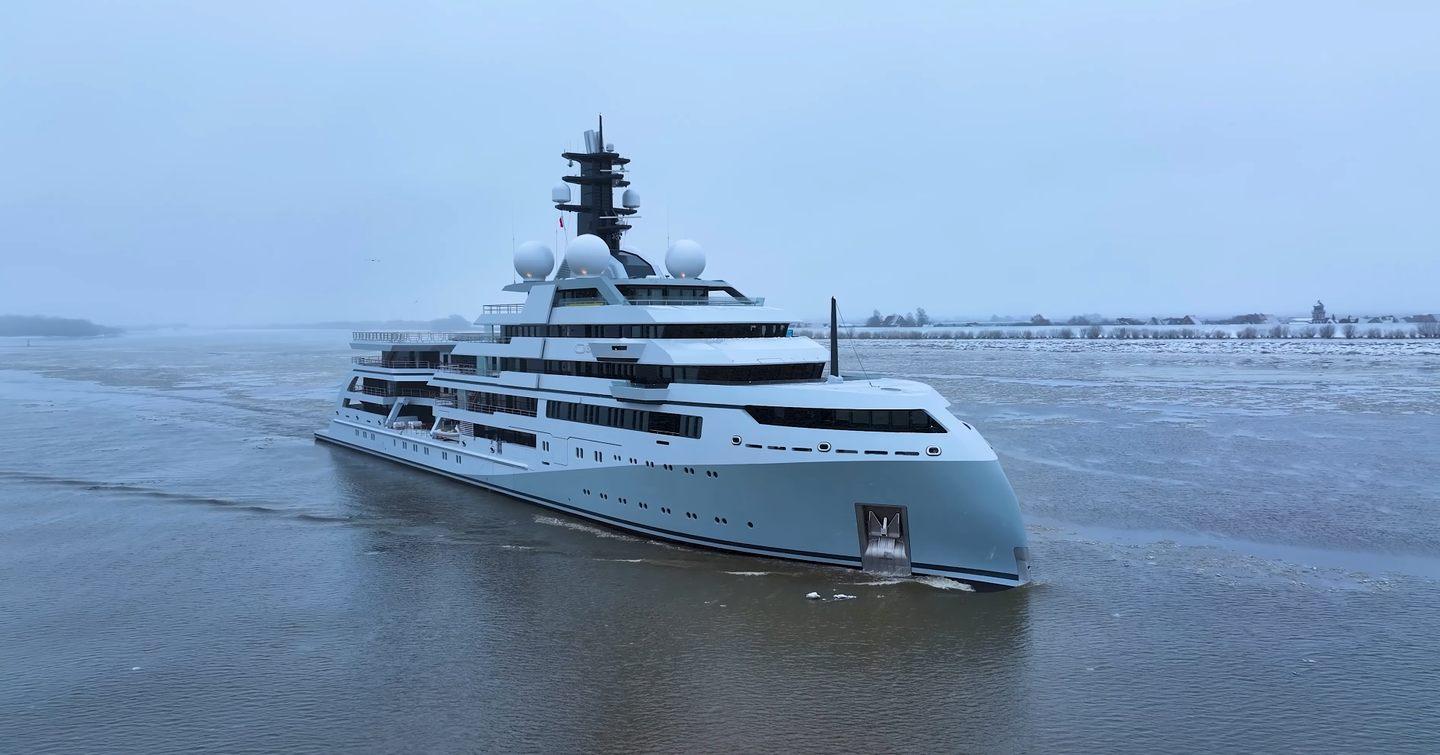
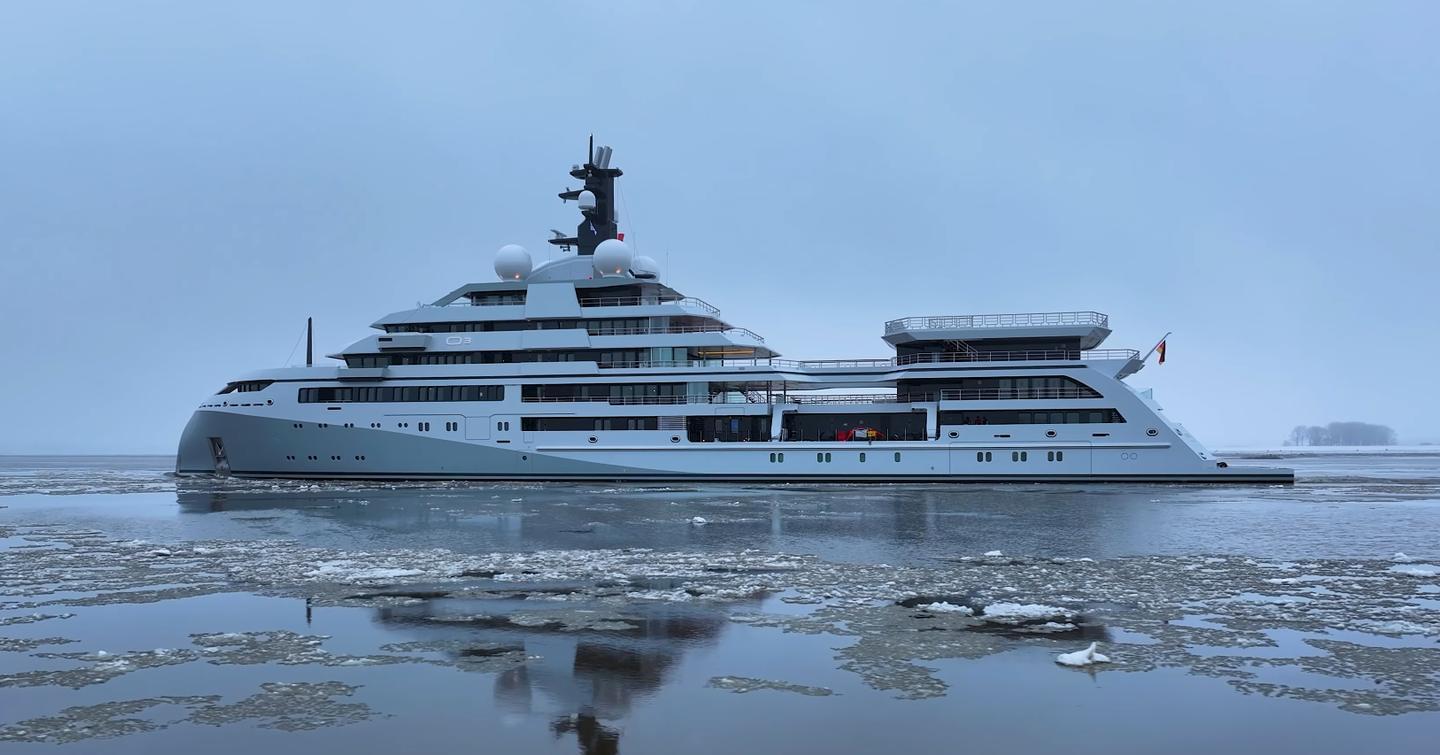
Recent sea trial and delivery images also provide a clearer view of the yacht's final configuration. The combination of an expedition style profile, helicopter facilities, a reported ice class hull and diesel electric propulsion suggests a vessel designed with operational flexibility in mind, although the owner's intended cruising programme has not been made public.
From Project Icecap to O3
The project first emerged under the name Icecap before later becoming known as Project Shackleton. Both names naturally led to speculation about expedition cruising and remote destinations, though no official connection between the names and the owner's plans has been disclosed.
Industry reporting suggests the project changed ownership during construction. While details surrounding that transition remain private, images from different stages of the build indicate that the yacht underwent several visible changes before completion.
One of the most noticeable developments appears to have taken place at the stern. Earlier project information referenced helicopter facilities, including a heli hangar, while the delivered yacht incorporates a prominent aft helicopter operating area. For a vessel expected to undertake long range cruising, helicopter support can provide practical benefits ranging from guest transfers to logistics and emergency access in remote locations.
The project also demonstrates how large yacht builds can continue evolving long after construction has begun. Changes in ownership, operational requirements or design priorities can all influence the final outcome, particularly on projects that span multiple years.
Design and Exterior Profile
The yacht's design has been associated with Salt Ship Design, while later revisions have been linked by industry sources to Espen Øino. Publicly available information does not fully detail how responsibilities were divided, but the delivered yacht combines several characteristics more commonly associated with expedition vessels than traditional luxury yachts.
One of the most distinctive features is the bow profile. O3 appears to incorporate an axe style bow with a near vertical forward section. This type of design is often found on offshore support vessels and expedition ships where efficiency and seakeeping are important considerations. Depending on the specific hull design, axe bows may help reduce pitching motions and improve comfort when operating in rougher sea conditions.
The yacht's freeboard is another feature that stands out. O3 appears to sit noticeably high above the waterline, creating substantial internal volume while also contributing to a purposeful appearance. Additional freeboard can improve protection from waves and spray while allowing designers to create larger interior spaces across multiple deck levels.
Several delivery images also show deep deck overhangs and sheltered exterior walkways. These features may not generate as much attention as beach clubs or swimming pools, but they can significantly improve the usability of outdoor areas in cooler climates or challenging weather conditions. Design decisions such as these often reveal as much about a yacht's intended operating environment as any published specification.
Ice Class Capability
One of the most frequently reported aspects of O3 is her ice classed hull. Several industry sources refer to the yacht as Ice Class 1B, although not all published reports specify the exact classification.
An ice class rating does not mean a vessel is capable of operating as an icebreaker. Instead, it generally indicates that the hull and certain systems have been strengthened to support operation in environments where ice may be encountered. Additional structural reinforcement, engineering protections and design considerations are often required to meet these classifications.
While the operational limits of O3 have not been publicly disclosed, the reported classification aligns with the broader explorer yacht profile that has followed the project since its earliest stages. Combined with her size and reported engineering package, the yacht appears configured for greater operational flexibility than many conventional cruising yachts.
Engineering and Propulsion
Technical details remain relatively limited, although multiple industry sources report that O3 uses a diesel electric propulsion system powered by three Wärtsilä engines.
Diesel electric propulsion has become increasingly common on larger yachts because it allows power generation and propulsion systems to be managed more independently. Depending on the configuration, this can support quieter operation, improved fuel efficiency and greater flexibility when balancing propulsion requirements with hotel loads and onboard systems.
For a yacht of this size, operational efficiency is about more than fuel consumption alone. Long range cruising places significant demands on power generation, air conditioning, stabilisation systems, guest amenities and crew operations. Diesel electric systems can provide greater flexibility when managing those competing demands.
At the time of writing, detailed information regarding range, fuel capacity, power output and energy management systems has not been publicly released. As a result, some aspects of the engineering package remain based on industry reporting rather than official technical documentation.
What Stands Out
Many yachts become known for a single defining feature. In the case of O3, it is the combination of features that makes the project particularly interesting.
The yacht brings together a reported ice class hull, diesel electric propulsion, substantial beam, helicopter facilities and an exterior profile that appears influenced by expedition vessels rather than purely recreational yachts. Individually, none of these features are unusual. Together, they create a yacht that appears focused on capability alongside luxury.
The project's evolution during construction is equally noteworthy. Comparisons between earlier images of Project Icecap and the delivered O3 show a vessel that appears to have developed considerably throughout the build process. The reported ownership change and subsequent design revisions may help explain some of those differences.
From a broader industry perspective, O3 also reflects continued interest in explorer yachts. While traditional Mediterranean and Caribbean cruising remain central to the industry, there appears to be growing demand for vessels capable of travelling further and operating in a wider range of environments.
What We Know and What Remains Unknown
Despite the amount of information now available, several aspects of O3 remain private.
Interior imagery has not yet been widely released, leaving many questions about accommodation layouts, guest facilities and interior styling unanswered. The full technical specification also remains unavailable, meaning some engineering details continue to rely on industry reporting.
Ownership is another area where publicly available information remains limited. While various reports and discussions have circulated within the industry, no official ownership announcement has been made public at the time of writing.
As additional information emerges, a more complete picture of the yacht's capabilities and intended role will likely develop.
Oceaneria's View
What stands out to us is how O3 appears to balance expedition capability with the scale and comfort expected from a modern superyacht. Many of the vessel's visible design features seem to prioritise practicality alongside luxury, something that is not always obvious on yachts of this size.
The reported ice class hull, 17.5 metre beam, diesel electric propulsion system, helicopter facilities and sheltered exterior deck spaces all point towards a yacht that may have been designed with a broad range of cruising environments in mind. While the owner's intended use has not been made public, the overall design appears capable of supporting operations beyond traditional Mediterranean cruising grounds.
The evolution of the project is also one of the more interesting parts of the story. Earlier images of Project Icecap and Project Shackleton show a noticeably different vessel to the yacht delivered as O3. The reported ownership change and subsequent redesign appear to have influenced both the profile and functionality of the final yacht.
Perhaps the most interesting aspect of O3 is that many of the visible design decisions appear to serve a practical purpose. The axe style bow may contribute to improved seakeeping, the substantial beam provides significant internal volume, and the protected deck arrangements suggest consideration was given to operating in a variety of weather conditions. Whether those capabilities are ultimately used for polar cruising, remote exploration or simply greater operational flexibility remains private, but they help distinguish O3 from many contemporary superyacht deliveries.
There is still much we do not know. Even so, O3 appears to represent the continued evolution of the explorer yacht segment, combining long range capability with the comfort and refinement expected of a modern superyacht. It is a vessel we will continue to follow as more information becomes available.

