
MarineMax Receives Billion Dollar Takeover Interest as Investors Target Yacht Industry Infrastructure
Oceaneria Industry Report
By the Oceaneria Recruitment Team
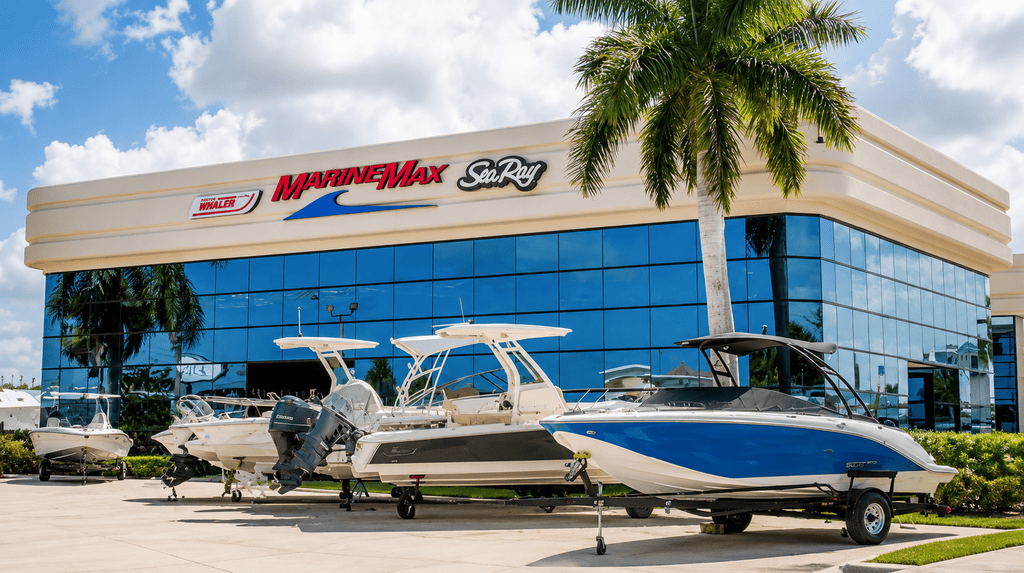
MarineMax has become one of the most closely watched corporate stories in the global yachting industry.
The company received a non binding all cash takeover proposal from investment firm Donerail Group, valuing MarineMax at approximately $1.1 billion.
At first glance, the story appears to be about a public company receiving a takeover offer.
However, the developments surrounding MarineMax point towards a much larger trend taking place across the marine sector.
Investors are showing increasing interest in the infrastructure that supports yacht ownership.
Marinas.
Storage facilities.
Brokerage businesses.
Management companies.
Owner services.
Global service networks.
MarineMax sits at the centre of many of those categories, making it one of the most strategically significant companies in the industry.
Donerail Made A Formal Takeover Approach
The story began when Donerail Group submitted a non binding proposal to acquire MarineMax for $35 per share in cash.
The proposal valued the company at approximately $1.1 billion and represented a significant premium to where the shares had previously traded.
Unlike market rumours or speculative reports, the proposal was a formal offer from an existing shareholder.
The bid immediately attracted attention throughout both the financial and marine sectors.
Donerail Was Already An Existing Shareholder
The proposal carried additional weight because Donerail was not approaching MarineMax as an outsider.
The investment firm already owned approximately 4% to 5% of the company's shares and had been actively engaged with management for some time.
As a result, the offer was viewed as coming from an investor already familiar with the company's assets, strategy, and market position.
That distinction made the proposal more credible than a typical unsolicited approach.
The Board Chose To Review The Proposal
MarineMax confirmed receipt of the proposal and announced that its board would review the offer alongside its financial and legal advisers.
The company neither endorsed nor rejected the proposal immediately.
Instead, it initiated a formal evaluation process.
This response suggested that the board considered the offer significant enough to warrant detailed consideration.
Financial Advisers Entered The Process
As the situation developed, reports indicated that MarineMax retained Wells Fargo as an adviser while Donerail worked with Jefferies.
The involvement of major advisory firms signalled that the discussions were moving beyond public debate and into a more structured process.
At this stage, attention shifted from whether an offer existed to whether a transaction could realistically be completed.
The Takeover Story Began Long Before The Offer
The proposal did not emerge in isolation.
Donerail had already been publicly pressuring MarineMax throughout 2025, calling for strategic changes and questioning leadership decisions.
The investment firm argued that shareholders were not fully benefiting from the value of the company's assets and encouraged the board to consider strategic alternatives.
The takeover offer represented the latest step in a longer activist campaign.
Governance Became Part Of The Debate
The discussions quickly expanded beyond valuation.
Donerail openly criticised aspects of the company's leadership and urged shareholders to oppose the re election of Chief Executive Officer Brett McGill to the board.
The activist campaign transformed the story into a broader debate around governance, leadership, and long term strategy.
Questions emerged around whether MarineMax was maximising shareholder value and whether changes were needed at the top.
MarineMax Defended Its Performance
MarineMax responded by highlighting its operating results.
The company pointed to growth in revenue, expansion across multiple business lines, increased adjusted EBITDA, and gross margins that remained above 30% for an extended period.
Management argued that the strategy was delivering results and that the market was failing to recognise the full value of the business.
This created a classic conflict between activist investors seeking change and management defending an existing strategy.
Shareholders Continued To Support Management
Despite the pressure campaign, shareholders re elected Brett McGill and other directors during the company's annual meeting.
While the activist campaign attracted attention, it did not immediately succeed in reshaping the board.
However, the vote did demonstrate that investor concerns had become part of the broader conversation surrounding the company.
Institutional Investors Added Pressure
The governance debate intensified as institutional investors including CalSTRS and other shareholder groups expressed concerns regarding leadership and strategic direction.
The involvement of large institutional investors increased scrutiny around MarineMax and added further credibility to calls for a strategic review.
As more investors entered the discussion, the story became increasingly difficult for management to ignore.
The Sale Process Continued To Develop
Subsequent reporting suggested that MarineMax moved forward with a structured sale process and allowed interested parties to progress into later stages of evaluation.
This development signalled that the company was treating potential acquisition interest seriously.
Rather than dismissing outside interest, the board appeared willing to explore available options.
Interest Extended Beyond Donerail
Reports indicated that multiple parties were evaluating MarineMax.
Among the names linked to the process were Blackstone, Centerbridge Partners, TPG, Blue Compass, and Island Capital Group.
The emergence of multiple interested parties suggested that the appeal of MarineMax extended well beyond a single activist investor.
Instead, the company appeared to be attracting attention from several major investment groups.
Confidentiality Agreements Signalled Serious Intent
As the process advanced, confidentiality agreements were reportedly distributed to interested parties.
This allowed prospective buyers access to detailed information about MarineMax's operations, assets, and financial performance.
Such agreements are a standard part of acquisition processes but also signal that discussions have moved beyond preliminary interest.
No Transaction Is Guaranteed
Despite the activity, there remains no certainty that a transaction will occur.
Many sale processes ultimately conclude without a completed deal.
Valuation expectations.
Financing.
Due diligence findings.
Strategic priorities.
Any of these factors can alter the outcome.
For now, the process remains active but unresolved.
MarineMax Is Much More Than A Boat Dealer
One reason the story has attracted such attention is the nature of MarineMax itself.
The company is often described as a boat retailer, but that description only captures part of the business.
MarineMax owns or operates a broad collection of assets and brands across the marine sector.
These include IGY Marinas, Fraser Yachts, Northrop & Johnson, Cruisers Yachts, Intrepid Powerboats, and a large global network of dealerships and marina facilities.
Its reach extends across much of the yacht ownership journey.
Scale Makes MarineMax Unusual
MarineMax operates more than 120 locations worldwide.
Its network includes more than 70 retail locations and approximately 65 marina and storage facilities.
Few companies within the marine industry possess a comparable footprint.
This scale creates operational advantages while also making the company attractive to investors seeking exposure to multiple segments of the industry through a single acquisition.
Fraser And Northrop & Johnson Connect The Story To Superyachts
The company's ownership of Fraser and Northrop & Johnson gives MarineMax a major presence within the global superyacht sector.
These businesses provide brokerage, charter, yacht management, and owner services across international markets.
As a result, any change in ownership could have implications extending beyond retail boat sales and marina operations.
The story directly touches the wider superyacht ecosystem.
IGY Marinas Is One Of The Most Important Assets
Many observers believe the company's marina portfolio is central to the investment interest.
MarineMax acquired IGY Marinas in 2022, gaining access to a global luxury marina network.
The acquisition expanded MarineMax's reach into some of the world's most important yachting destinations and created a recurring revenue stream that differs from traditional boat sales.
Marina Assets Are Increasingly Valuable
The growing interest in marinas is not limited to MarineMax.
Recent years have seen significant institutional investment in marina infrastructure.
The most prominent example was Blackstone's acquisition of Safe Harbor Marinas, a transaction valued at approximately $5.65 billion.
That deal drew attention to the strategic value of marina assets and helped reshape investor perceptions of the sector.
Infrastructure Is Attracting Institutional Capital
Marinas offer characteristics that many investors find attractive.
Limited supply.
Prime waterfront locations.
Recurring revenue.
Long term customer relationships.
High barriers to entry.
These features make marina assets fundamentally different from cyclical boat sales businesses.
As a result, institutional investors increasingly view marina networks as infrastructure investments rather than lifestyle assets.
The Marine Sector Remains Highly Fragmented
Another factor driving interest is fragmentation.
Large portions of the marine industry remain divided among smaller operators.
Historically, fragmented sectors often attract consolidation strategies because scale can create efficiencies, stronger market positions, and improved profitability.
MarineMax already possesses substantial scale, making it a natural platform for further expansion.
Recurring Revenue Is Becoming More Valuable
Boat sales can fluctuate with economic conditions and consumer confidence.
Marina operations, storage services, maintenance, and owner support services often provide more predictable revenue streams.
This distinction is increasingly important for investors evaluating marine businesses.
Recurring income is generally viewed as more stable and easier to forecast than transactional sales activity.
Market Speculation Influenced The Share Price
As takeover discussions progressed, MarineMax shares responded positively.
Investors began pricing in the possibility of a transaction, resulting in a significant increase in the company's market value.
The reaction reflected growing expectations that strategic activity could unlock value that some investors believed was not fully reflected in the share price.
Long Term Performance Helped Fuel Activism
Part of the activist campaign centred on the company's long term stock performance.
While MarineMax expanded its asset base significantly, some shareholders argued that share price performance had not adequately reflected those investments.
This gap between asset value and market valuation became a central argument within the takeover discussion.
Why This Matters
The MarineMax story extends far beyond a single takeover proposal.
It highlights growing investor interest in the broader infrastructure that supports yacht ownership.
Marinas.
Brokerage firms.
Management companies.
Storage networks.
Service providers.
These assets are becoming increasingly valuable as investors seek exposure to the recurring revenue streams generated throughout the ownership lifecycle.
The outcome of the MarineMax process could influence how other marine businesses are valued and may encourage further consolidation throughout the sector.
The Oceaneria View
The MarineMax story is bigger than a $1.1 billion takeover offer.
The real story is consolidation.
For years, much of the industry's attention focused on yacht builders, brokerage transactions, charter activity, and vessel ownership.
Increasingly, investors are looking elsewhere.
They are looking at the infrastructure behind the lifestyle.
Marinas.
Berths.
Storage.
Management.
Brokerage.
Owner services.
MarineMax sits across many of these categories, which is what makes the company so strategically important.
The interest from Donerail, Blackstone, and other investment groups suggests that institutional capital increasingly sees value not only in yachts themselves, but in the systems that support ownership over decades.
That may prove to be the most important takeaway.
The industry is gradually becoming more professionalised, more integrated, and more attractive to large scale investors.
If MarineMax ultimately changes hands, the deal could become a landmark moment in a broader consolidation trend that is only beginning to emerge.
The yachts may capture the headlines.
But the infrastructure behind them is where some of the biggest investment battles now appear to be taking place.

