
Relationships in the Yachting Industry: Dating, Family, Loneliness and Life Onboard
Oceaneria Yacht Industry Report
By the Oceaneria Recruitment Team
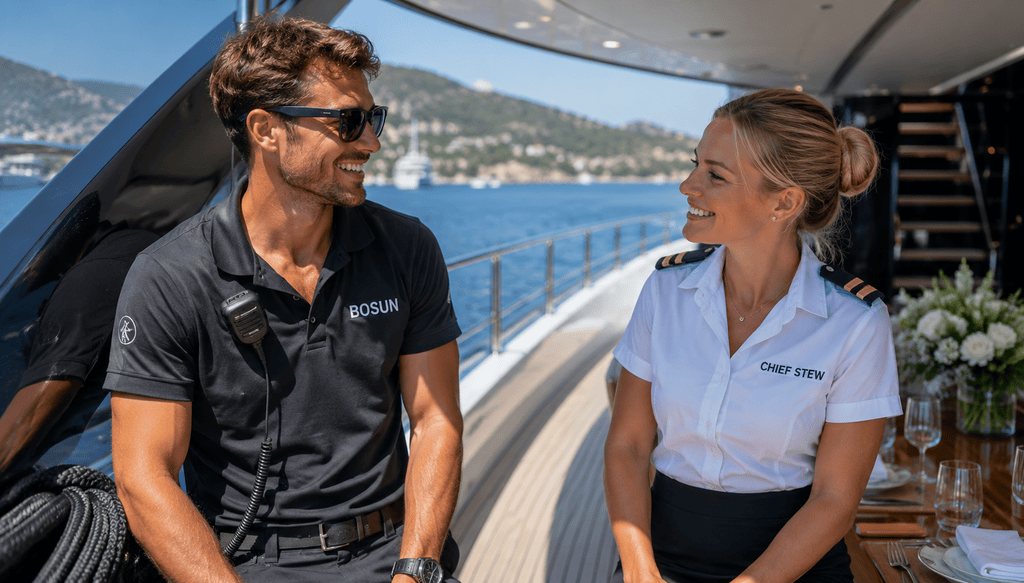
Relationships in yachting are complicated.
Not impossible.
Not doomed.
But definitely complicated.
The yacht industry creates a very unusual mix of freedom, travel, pressure, isolation, close quarters, long hours and intense social connection. That can be exciting. It can also be messy.
People fall in love onboard.
People maintain long distance relationships from the other side of the world.
Some couples work together for years.
Some families make it work by travelling near the yacht, living between vans, rentals and crew hubs.
Some relationships fall apart under the pressure.
And sometimes, when relationships break down onboard, the whole vessel feels it.
So this is not just a personal topic.
It is a career topic.
It affects crew wellbeing, crew culture, retention, leadership, professionalism and sometimes even safety.
Yachting Is Not a Normal Workplace
Most jobs have a simple separation.
You go to work.
Then you go home.
Yachting does not work like that.
You live where you work.
You eat with the people you work with.
You sleep close to the people you work with.
You may socialise with the people you work with.
You may be tired, stressed, excited, lonely and homesick around the same small group of people for months.
That changes things.
Normal workplace tension becomes more personal.
Normal attraction can grow faster.
Normal arguments can feel bigger.
Normal loneliness can become heavier.
There is no easy escape hatch.
If you have an argument in an office, you can go home.
If you have an argument on a yacht, you may still need to sit across from that person in the crew mess, work beside them during guest service, share a cabin nearby, or communicate with them during a safety critical task.
That is why relationships in yachting need more care than people sometimes expect.
Why Relationships Start Quickly Onboard
Crew often form strong bonds fast.
That is not surprising.
They share pressure.
They share travel.
They share tired days.
They share late nights.
They share experiences that people at home may not fully understand.
They may be away from their usual support network, and the crew around them become their immediate world.
That can create real connection.
It can also create emotional shortcuts.
You may feel very close to someone because you are living inside the same high pressure bubble.
That does not always mean the relationship will work outside that bubble.
This is where people need to slow down.
A relationship that starts during a busy Med season may feel intense because everything around it is intense.
The question is not only, “Do we like each other onboard?”
The better question is, “Can this work when we are tired, off rotation, in different countries, under pressure, around other crew, and back in normal life?”
Loneliness Is a Big Part of the Story
Loneliness is one of the quieter drivers behind relationships in yachting.
People do not always say it directly.
They may say they are bored.
They may say they miss home.
They may say they need someone who understands.
They may say the crew feels like family.
But under that, loneliness is often sitting there.
You can be surrounded by people and still feel lonely.
You can be on a beautiful yacht in the Mediterranean and still miss your partner, your child, your parents, your friends or your normal routine.
That loneliness can push people towards connection.
Sometimes that connection is healthy.
Sometimes it is just a way to cope.
That is an important difference.
If someone starts a relationship because they genuinely care for the person, that is one thing.
If they start a relationship because they are isolated, exhausted and desperate for comfort, that can become complicated quickly.
Long Distance Is Harder at Sea
Long distance relationships are hard in any industry.
Yachting adds extra layers.
Time zones change.
Internet can be patchy.
Guest trips can run late.
Crew may not have privacy.
The yacht programme can change overnight.
A promised call can be missed because service ran late or the captain moved departure forward.
The person ashore may not understand why communication is so inconsistent.
The crew member may feel guilty.
The partner may feel ignored.
Then both people start defending themselves.
That is how small cracks grow.
To make long distance work, both sides need realistic expectations.
The partner ashore needs to understand that yacht work is not a normal schedule.
The crew member needs to understand that “I’m busy” cannot be the only answer for months.
Small consistent effort matters.
A short voice note.
A message before bed.
A planned call window.
A photo from the day.
A clear explanation when plans change.
It does not have to be dramatic.
It just has to be consistent.
Trust Is the Foundation
Without trust, yachting relationships become exhausting.
The onboard environment can create insecurity.
Crew work closely with other people.
They may share cabins nearby.
They may go out with crew during time off.
They may be around alcohol, parties, guest trips and travel.
The partner at home may start imagining the worst.
Sometimes those fears are unfair.
Sometimes they are based on real patterns in the industry.
Either way, the relationship needs boundaries.
Trust does not mean pretending there is no risk.
Trust means both people understand the risk and behave properly anyway.
That includes:
✓ Being honest about social plans
✓ Not hiding close friendships
✓ Not using poor WiFi as an excuse for secrecy
✓ Not drinking heavily in risky situations
✓ Not flirting for attention
✓ Not creating emotional relationships that replace the partner
✓ Not making the partner feel foolish for asking normal questions
A strong relationship does not need constant policing.
But it does need clear behaviour.
Cheating Is Discussed Often, but It Is Not Inevitable
People talk about cheating in yachting a lot.
Sometimes too casually.
The truth is more balanced.
Yachting does not automatically make people cheat.
But it can expose weak boundaries.
Distance, loneliness, alcohol, close quarters, travel, secrecy and temptation can create the conditions.
That is not an excuse.
It is a warning.
People with strong values and clear boundaries can work in yachting and stay loyal.
People without those boundaries may struggle.
The industry does not remove personal responsibility.
If anything, it makes personal responsibility more important.
Onboard Relationships Can Work
Some onboard relationships work very well.
A partner in the same industry understands the lifestyle.
They understand why plans change.
They understand why you are tired.
They understand guest pressure, crew politics, long hours and the strange emotional rhythm of yacht life.
That shared understanding can be powerful.
Some couples build entire careers together.
Captain and chef.
Engineer and stewardess.
Deck and interior.
Engineer and chef.
Captain and chief stewardess.
Senior crew couples can become stable, reliable and attractive to the right yacht.
But it only works when both people are professional first.
The yacht cannot become the stage for the relationship.
Professionalism Comes First
If a couple works onboard together, they need one rule above everything else.
Crew first.
Couple second.
That means:
✓ No arguing in crew areas
✓ No public affection during work
✓ No favouritism
✓ No taking sides automatically
✓ No isolating from the rest of the crew
✓ No bringing private problems into service
✓ No using the relationship to avoid duties
✓ No creating awkwardness for other crew
Other crew should not have to live inside your relationship.
They should not have to watch tension, manage your moods, or guess whether a personal argument will affect the workday.
A good yacht couple protects the crew environment.
A bad yacht couple drains it.
Breakups Onboard Can Affect the Whole Vessel
This is one of the biggest risks.
When two people break up onboard, it rarely stays private.
People notice.
The crew mess feels different.
Communication changes.
Work handovers get awkward.
Other crew may take sides.
The department may suffer.
The captain may have to manage something that started as a private issue but has now become an operational problem.
A breakup can create:
✓ Poor communication
✓ Gossip
✓ Cabin tension
✓ Department conflict
✓ Emotional distraction
✓ Favouritism claims
✓ Crew morale problems
✓ Resignation risk
✓ Safety concerns if people stop cooperating properly
This is why some yachts are cautious about crew relationships.
They are not always being old fashioned.
They are trying to protect the vessel.
There Is No Single Universal MCA Rule on Dating Onboard
This is important.
There is not one simple MCA rule that says yacht crew can or cannot date onboard.
In most cases, dating and relationships are handled through vessel policy, employment contracts, crew handbooks, captain’s standing orders, management company rules and owner preference.
What does matter formally is the broader legal and welfare framework.
Crew must have proper employment agreements where applicable.
Crew must have access to fair complaint procedures.
Bullying, harassment, discrimination, abuse and violence are serious workplace issues.
Consent, safety, privacy, conduct and power dynamics matter.
So while “dating” itself may not be banned by law, behaviour connected to relationships can absolutely become a legal, employment or welfare issue.
That includes harassment, coercion, abuse, favouritism, bullying, retaliation, sexual harassment, unsafe conduct or failure to follow vessel policy.
Some Yachts Ban Relationships
Some yachts have strict rules.
They may ban relationships between crew.
They may ban relationships within departments.
They may ban relationships between senior and junior crew.
They may prevent mixed gender cabin sharing.
They may require couples to disclose the relationship.
They may allow existing couples but discourage new onboard relationships.
They may allow couples only if the roles and cabin arrangements make sense.
The policy depends on the yacht.
It can be influenced by:
✓ Owner preference
✓ Captain’s leadership style
✓ Management company policy
✓ Yacht size
✓ Cabin layout
✓ Crew gender mix
✓ Department structure
✓ Past bad experiences
✓ Charter versus private use
✓ Insurance and employment risk
Candidates should ask about policy early if it affects them.
Do not assume.
Power Dynamics Can Make Relationships Risky
Relationships between people of different rank need extra caution.
Examples include:
✓ Captain and junior crew
✓ Chief officer and deckhand
✓ Chief stewardess and junior stew
✓ Engineer and junior crew
✓ Head of department and subordinate
The issue is not only romance.
It is power.
Can the junior person say no freely?
Will they fear losing their job?
Will other crew think they are receiving special treatment?
Will feedback become personal?
Will discipline become complicated?
Will the senior person use rank to influence the relationship?
Even if both people feel the relationship is genuine, the perception onboard may still be difficult.
This is why many professional environments are careful with relationships where one person manages the other.
On a yacht, the risk is stronger because people live together too.
Guest and Owner Boundaries Must Be Clear
Crew should be extremely careful with guests, owners and owner representatives.
The yacht is a workplace.
A guest may be charming.
An owner may be friendly.
A party may feel informal.
But the power imbalance is huge.
Relationships or sexual situations involving guests, owners or powerful figures can create serious professional and personal risk.
Even when something appears mutual, the environment can be complicated by alcohol, money, hierarchy, privacy and fear of career consequences.
The safest rule is simple.
Do not blur guest, owner and crew boundaries.
Couples Jobs Can Be a Strong Fit
Couples can be excellent for the right yacht.
They may bring stability.
They may stay longer.
They may support each other.
They may need one cabin instead of two, depending on the yacht and policy.
They may be less likely to leave because of loneliness.
They may understand each other’s pressure better.
For smaller yachts, some owners like couples because they can create a more settled onboard feel.
For example, a captain and chef couple can suit a private family yacht.
An engineer and stewardess couple may work well on a smaller private vessel.
A senior couple with strong references can be attractive because they come as a known team.
But this only works if both people are independently good at their jobs.
A yacht is not hiring a relationship.
It is hiring two professionals.
Couples Jobs Are Harder for New Crew
This is where expectations need to be managed.
New couples often want to enter yachting together.
That is understandable.
But it is hard.
A yacht needs the right two roles open at the same time.
Both people must suit the yacht.
Both must have the right documents, experience, attitude and references.
The cabin arrangement must work.
The captain must be comfortable with the relationship.
The owner or management company must be comfortable with it.
That is a lot of boxes to tick.
For green crew, it may be smarter to accept separate roles at first.
Build experience.
Build references.
Prove yourselves individually.
Then apply as a stronger couple later.
The Best Couples Are Assets, Not Complications
A strong yacht couple makes the captain’s life easier.
They communicate well.
They stay professional.
They help each other improve.
They do not isolate themselves.
They do not bring domestic tension into the workplace.
They support the wider crew.
They understand boundaries.
They can be trusted.
A weak couple does the opposite.
They argue.
They create awkwardness.
They expect special treatment.
They exclude other crew.
They threaten to leave together.
They use the relationship as protection.
They make other crew uncomfortable.
That is why yachts can be cautious.
They have seen both versions.
Vessel Size Changes the Relationship Dynamic
Size matters.
On smaller yachts, relationships are more visible.
There are fewer crew.
Less privacy.
Fewer cabins.
Less room to avoid tension.
If a couple argues on a 35m yacht, everyone may feel it.
But smaller yachts may also like established couples because they can bring stability and reduce cabin pressure if sharing is allowed.
On larger yachts, there is more space, more departments and more structure.
A relationship may be easier to manage because the crew is bigger.
But larger yachts also have more formal policies, more hierarchy and more HR style management.
So the relationship may be less visible socially, but more controlled professionally.
There is no perfect size.
Smaller yachts can feel more personal.
Larger yachts can feel more structured.
Both have pros and cons.
Charter Yachts Can Be Harder on Relationships
Charter yachts can be intense.
Guest trips.
Quick turnarounds.
High service expectations.
Late nights.
Tip pressure.
Less downtime.
This can be hard for couples onboard and long distance partners ashore.
During charter season, a crew member may have very little energy for emotional connection.
The partner at home may feel ignored.
The couple onboard may struggle to find private time.
A breakup during charter season can be especially disruptive because the yacht has little room for emotional chaos.
Private yachts can also be demanding, but charter yachts often add another layer of commercial pressure.
The Mediterranean Adds a Specific Rhythm
The Mediterranean season has its own relationship pattern.
Spring can feel exciting.
People arrive in Antibes, Palma, Monaco, Nice, Cannes, Barcelona, Genoa, Viareggio and other hubs.
Crew meet people.
They train.
They day work.
They go out.
They build new networks.
Then summer arrives.
The work ramps up.
Time disappears.
The people who were available in spring may become exhausted by July.
Relationships that felt easy during setup can become strained during the season.
Autumn brings uncertainty.
Will the yacht cross?
Will crew leave?
Will contracts end?
Will the relationship continue?
Will one person move to another yacht?
Winter can either bring reconnection or distance.
This seasonal rhythm matters.
A relationship that survives spring social life still needs to survive summer pressure.
Families Can Work, but They Need a System
Can you maintain a family while working onboard?
Yes.
But it needs planning.
Family life in yachting is not impossible, but it is rarely casual.
A family needs to understand:
✓ The yacht’s programme
✓ The leave pattern
✓ Whether rotation exists
✓ Communication limits
✓ Financial goals
✓ Childcare needs
✓ Travel plans
✓ Schooling if children are older
✓ Visa and location issues
✓ Emergency plans
✓ Long term career plans
If the family simply reacts to the yacht all the time, it becomes stressful.
A system helps.
The Mobile Family Model Can Work
Some families follow the yacht season.
They may live in a van.
They may use short term rentals.
They may move between Med hubs.
They may stay near Palma, Antibes, Monaco, Nice, Cannes, Barcelona, Genoa or refit locations.
This can be a smart bridge.
It keeps the family physically closer.
It allows short visits.
It lets a child see the working parent more often.
It can turn yachting into a shared family adventure.
But it still has limits.
Being near the yacht does not mean having time together.
The crew member may still work late.
The yacht may move.
Guest trips may change.
Days off may disappear.
The non working partner may carry the emotional and childcare load.
The child may need routine.
Van life or short term rentals can help, but they do not remove the pressure.
They just make connection more possible.
Rotation Helps Families
Rotation is one of the biggest relationship supports in yachting.
A clear 2:2, 10:10, 8:8 or 3:1 rotation gives families something to build around.
They can plan.
They can recover.
They can share parenting.
They can book travel.
They can attend important family events.
They can have normal life in blocks.
This is why many crew become more focused on rotation as they get older or start families.
Early in a career, salary and travel may matter most.
Later, time becomes the real currency.
Permanent Roles Can Still Work for Families
Permanent does not mean impossible.
Some permanent roles are stable, well managed and family aware.
A good permanent role may offer decent leave, good communication, predictable winter periods and a captain who understands family needs.
But unclear leave is hard on families.
If the partner never knows when the crew member will come home, resentment can build.
If children keep being disappointed, it becomes painful.
If the shore based partner is carrying everything alone, the relationship can become uneven.
Permanent roles work best when the yacht is honest and organised.
The Shore Based Partner Carries a Lot
People often focus on the crew member.
But the partner ashore carries a heavy load too.
They may manage the home.
Children.
Finances.
Family emergencies.
Loneliness.
Jealousy.
Social plans.
Questions from friends and family.
Their own career.
And they may do all of that while trying to be supportive.
That can become emotionally tiring.
A successful yachting relationship needs to respect the shore partner’s work too.
They are not “just waiting.”
They are often holding the whole land based life together.
The Crew Member Also Needs Support
At the same time, the crew member is not just off having fun.
They may be exhausted.
They may be under pressure.
They may be lonely too.
They may feel guilty for missing things.
They may feel torn between ambition and family.
They may not have privacy to talk.
They may be surrounded by people but unable to speak honestly.
That is why both sides need compassion.
The relationship should not become a competition over who has it harder.
Both people are carrying something different.
Children Change the Decision
Children make yachting decisions sharper.
A single person can tolerate uncertainty more easily.
A couple without children may adapt.
But children need presence, routine and emotional consistency.
That does not mean a parent cannot work onboard.
Many do.
But the family needs a stronger plan.
Questions become more serious:
✓ Is rotation available?
✓ How much leave is realistic?
✓ Can the family follow the season?
✓ What happens when school starts?
✓ Is the income worth the absence?
✓ Is there a shore based path later?
✓ How long can this arrangement work?
At some point, many crew with children consider moving into shore based yachting, relief work, rotation only roles, refit support, yacht management, engineering support, recruitment, brokerage or operations.
That is not failure.
It is the career adapting to life.
Isolation Can Push People Into Risky Choices
Loneliness and isolation can lead people into decisions they might not make on land.
That could be a rushed onboard relationship.
Emotional dependence on a crew member.
Heavy drinking.
Secret messaging.
Affairs.
Staying in a bad relationship because it feels better than being alone.
Ignoring red flags because the person is nearby and available.
This is not about judging people.
It is about understanding the environment.
When people are tired and lonely, they can make poor decisions.
Good crew learn to notice this in themselves.
Good leaders notice it in their teams.
Healthy Social Connection Matters
The answer is not isolation.
Crew need social connection.
They need friends.
They need support.
They need people to talk to.
A healthy crew culture can reduce loneliness and protect people from making poor emotional choices.
The goal is not “don’t connect.”
The goal is “connect with boundaries.”
Good friendships onboard can be protective.
Drama driven relationships can be destructive.
There is a difference.
Boundaries Protect Everyone
Boundaries are not cold.
They protect people.
Useful boundaries include:
✓ Do not date someone in your reporting line
✓ Do not argue in crew areas
✓ Do not involve the whole crew in private problems
✓ Do not use alcohol to manage relationship stress
✓ Do not post private crew life online
✓ Do not flirt with guests
✓ Do not confuse emotional closeness with commitment
✓ Do not let personal issues affect safety duties
✓ Do not pressure anyone into secrecy
✓ Do not use rank, age or experience to influence someone romantically
Boundaries make relationships safer.
They also protect careers.
Captains and Senior Crew Need to Lead Early
Relationship issues should not only be managed after something goes wrong.
Captains and senior crew need clear expectations.
A good crew handbook should cover:
✓ Crew relationships
✓ Cabin sharing
✓ Guest boundaries
✓ Harassment
✓ Consent
✓ Bullying
✓ Reporting concerns
✓ Alcohol and conduct
✓ Social media
✓ Conflict resolution
✓ Confidential support routes
✓ What happens if a relationship affects work
This is not about controlling adult lives.
It is about protecting the vessel and the crew.
Complaints and Welfare Support Matter
If a relationship becomes harassment, bullying, coercion, abuse or intimidation, it is no longer a private relationship issue.
It is a welfare and employment issue.
Crew should know how to raise concerns.
They should know who to speak to.
They should know whether there is a designated person ashore.
They should know how to contact management.
They should know where to get confidential support.
They should also understand that support is available outside the yacht if they do not feel safe raising it onboard.
This matters because the person causing harm may be senior.
Or popular.
Or protected.
Or connected to the owner.
A proper reporting route matters.
Red Flags Onboard
Crew should be alert to relationship red flags.
Examples:
✓ Someone pressures you to keep things secret
✓ A senior crew member uses rank to get close to you
✓ A partner becomes controlling
✓ Someone monitors your phone or movements
✓ Arguments affect your work
✓ You feel afraid to end the relationship
✓ Other crew are being pulled into private conflict
✓ Alcohol is involved in repeated incidents
✓ Consent is unclear
✓ You feel isolated from the rest of the crew
✓ You are worried about retaliation
If any of these appear, the issue needs to be taken seriously.
Practical Ways to Manage a Relationship While Working Onboard
If you are in a long distance relationship:
✓ Agree realistic communication times
✓ Explain busy periods before they happen
✓ Use voice notes when calls are hard
✓ Share small daily details
✓ Be honest about crew social life
✓ Plan visits carefully
✓ Talk about jealousy before it becomes a fight
✓ Make leave dates meaningful
✓ Keep future plans visible
If you are dating onboard:
✓ Move slowly
✓ Keep work professional
✓ Avoid public drama
✓ Respect the wider crew
✓ Do not involve guests
✓ Think carefully about hierarchy
✓ Have a plan if it ends
✓ Do not let the relationship define your reputation
If you are working as a couple:
✓ Keep professional roles clear
✓ Avoid special treatment
✓ Do not isolate from crew
✓ Make space for individual friendships
✓ Manage conflict privately
✓ Support each other without defending poor behaviour
✓ Keep the yacht’s needs first during work hours
If you have a family:
✓ Push for clear leave or rotation
✓ Plan communication around the yacht’s real schedule
✓ Build financial goals
✓ Protect family time during leave
✓ Consider mobile family support if practical
✓ Review the arrangement every season
✓ Think about shore based options early
What Candidates Should Ask Before Joining a Yacht
If relationships or family matter to you, ask sensible questions before accepting the role.
You can ask:
✓ What is the leave structure?
✓ Is there rotation?
✓ Are flights included?
✓ How does the yacht handle crew couples?
✓ Are crew relationships allowed?
✓ Is cabin sharing possible or restricted?
✓ Does the yacht have a crew handbook?
✓ Who handles welfare concerns?
✓ Is there a management contact ashore?
✓ What is the usual season programme?
✓ How often do crew get proper time off?
✓ Is internet generally available?
These questions are not unreasonable.
They help you understand the environment.
What Employers Should Think About
Yachts should also be honest.
If the vessel does not want couples, say so.
If relationships are not allowed, say so.
If cabin sharing is impossible, say so.
If the role is unsuitable for someone with family commitments, be clear.
But employers should also recognise that relationships and families are part of crew retention.
If the industry wants experienced crew to stay, it cannot pretend personal life does not exist.
Better leave, clearer contracts, good leadership, respectful culture and realistic family support can all help.
Oceaneria View
Relationships in yachting are not a side issue.
They are part of the working reality.
Crew are human.
They get lonely.
They fall in love.
They miss people.
They make mistakes.
They build families.
They burn out.
They try to balance ambition with connection.
The industry sometimes talks about relationships as if they are just drama.
But that is too simple.
Loneliness can be a real catalyst.
Distance can strain even strong relationships.
Onboard romance can become difficult because the yacht is both workplace and home.
Families can survive yachting, but they need structure, honesty and a realistic plan.
Couples can be a huge asset, but only when they are professional, stable and individually strong.
The best approach is not to pretend relationships will not happen.
They will.
The better approach is to manage them properly.
Clear policies.
Clear boundaries.
Clear contracts.
Clear communication.
Clear support.
And for crew, the message is simple.
Protect your reputation.
Protect your relationship.
Protect your mental health.
And do not confuse intensity with stability.
A yacht can make emotions feel bigger than they are.
So move carefully.
Build trust slowly.
Stay professional.
And if yachting is going to be part of your life, make sure your relationships are strong enough, honest enough and supported enough to survive the reality of it.
Join Our Yacht Professional Network
If you're ready for your next opportunity, up for the challenge of building a career in the yachting industry, or simply want to stay informed about future roles, salary insights and industry opportunities, we encourage you to submit your profile to Oceaneria.
By joining our network, you'll become part of a growing community of yacht professionals and gain access to career opportunities, industry knowledge and practical insights designed to help you move forward.

