
Yacht Sinking in Turkey Draws Industry Attention as Familia Incident Raises Questions Around Maintenance, Refits and Risk Management
Oceaneria Yacht Industry Report
By the Oceaneria Recruitment Team
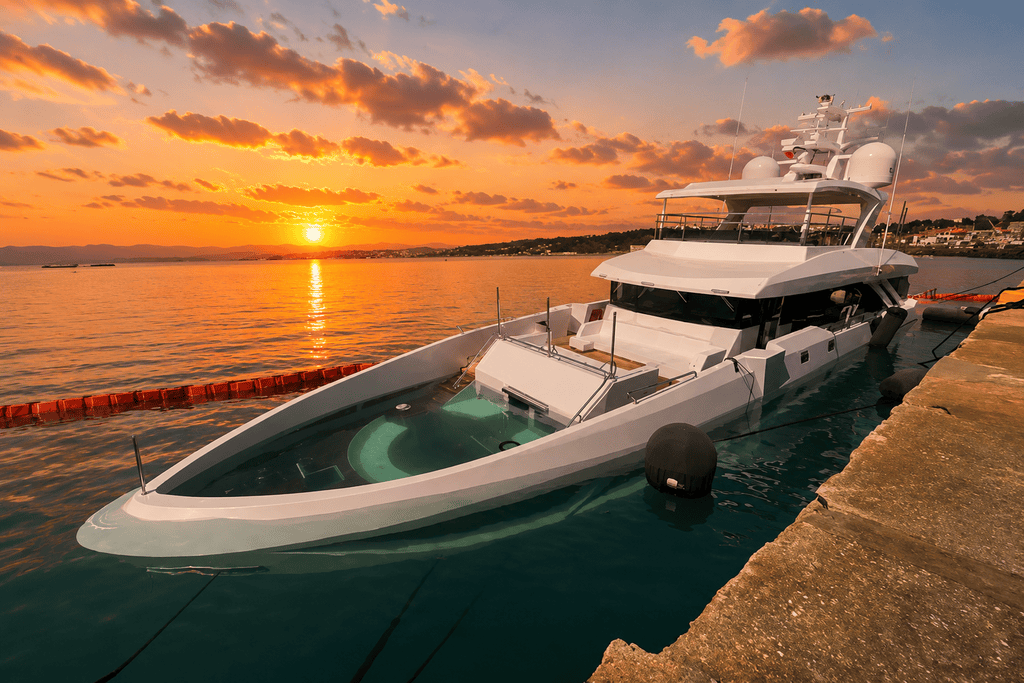
The sinking of the 40-metre motor yacht Familia in Sinop, Turkey has become one of the most widely discussed operational incidents in the yachting industry this year.
At first glance, the story appears to be a local marine casualty involving a single vessel.
However, the widespread attention surrounding the incident reflects something much larger.
The sinking has triggered discussions across shipyards, management companies, insurers, surveyors, captains, engineers, and yacht owners about maintenance standards, refit oversight, flooding risks, emergency procedures, insurance exposure, and environmental protection.
The industry is not simply discussing a yacht that sank.
It is discussing what can be learned from the incident.
Familia Began Taking On Water While Moored In Sinop
According to industry reports, Familia began taking on water while berthed in Sinop on Turkey's Black Sea coast during the evening of 30 May.
The flooding reportedly developed while the vessel was alongside rather than underway.
This detail immediately attracted attention because many owners naturally associate major losses with storms, collisions, or offshore incidents.
In reality, some of the most serious marine casualties begin while vessels are stationary and appear to be operating in relatively safe conditions.
The Yacht Sank At The Berth
By the following morning, the vessel had largely submerged, with only portions of the superstructure remaining visible above the waterline.
Images from the scene quickly spread throughout the industry, appearing across major yachting publications, LinkedIn, Facebook groups, and maritime discussion forums.
The visual impact of seeing a modern superyacht submerged at a marina helped propel the story far beyond Turkey.
All Crew Were Safely Evacuated
Perhaps the most important aspect of the incident is that all six crew members onboard were evacuated safely.
No injuries were reported.
In any marine casualty, the safety of crew and passengers remains the primary concern.
While the vessel itself suffered extensive damage, the absence of injuries is widely regarded as the most positive outcome of the event.
Investigators Have Yet To Confirm A Cause
At the time of writing, no official cause has been released.
Investigations remain ongoing.
That lack of certainty has inevitably led to considerable discussion throughout the industry.
Engineers, surveyors, captains, and insurers have all speculated about possible contributing factors.
However, industry professionals have consistently stressed the importance of allowing investigators to complete their work before drawing conclusions.
The final report will likely become one of the most closely reviewed documents of the year within technical yachting circles.
Weather Conditions Have Become Part Of The Discussion
Local reports indicated heavy rainfall in the area during the evening the flooding occurred.
However, no official source has linked weather conditions directly to the casualty.
The discussion nevertheless highlights a broader reality.
Weather can contribute to marine incidents, but significant flooding events typically involve multiple factors rather than a single cause.
The Timing Of The Refit Has Attracted Particular Attention
One reason this story has gained such widespread attention is because Familia had recently completed an extensive six month refit programme.
The vessel had reportedly returned to service only shortly before the casualty occurred.
Whenever a significant incident follows a major refit, the industry naturally focuses on systems, modifications, commissioning procedures, and engineering oversight.
This does not imply a connection.
However, it does explain why the timing has become a central topic of discussion.
The Yacht Underwent A Significant Structural Extension
As part of the refit programme, Familia reportedly received a two metre hull extension.
The modification was designed to improve onboard volume while enhancing stability and seakeeping characteristics.
Major structural modifications are among the most complex projects undertaken in yacht refits.
They require extensive engineering analysis, documentation, survey work, and validation procedures.
As a result, the extension has become one of the most frequently discussed aspects of the incident.
Stability Discussions Emerged Across Social Media
Following publication of the story, engineers and industry professionals began discussing stability assessments, lightship calculations, and post-refit certification requirements.
Several LinkedIn discussions focused on the importance of stability verification following major modifications.
Importantly, no evidence currently suggests stability issues caused the casualty.
However, the conversations demonstrate how closely the industry scrutinises significant structural changes.
Survey And Classification Procedures Are Receiving Renewed Attention
The incident has also reignited discussions around survey requirements and classification processes following major yacht modifications.
Modern refits increasingly resemble complex engineering projects rather than cosmetic upgrades.
As yachts become larger and more technically sophisticated, independent verification and documentation continue to grow in importance.
Flooding Risk Remains One Of The Industry's Greatest Operational Threats
Regardless of the eventual cause, the casualty highlights a reality well understood by captains and engineers.
Uncontrolled water ingress remains one of the fastest ways a vessel can be lost.
Flooding incidents often begin with relatively small failures.
A fitting.
A hose.
A seal.
A through hull connection.
A system malfunction.
If not detected early, those failures can escalate rapidly.
Monitoring Systems Are Back In The Spotlight
The sinking has prompted renewed discussion around bilge alarms, remote monitoring systems, flood detection technology, and automated notification systems.
Many industry professionals argue that modern monitoring technology represents one of the most effective safeguards against flooding related casualties.
Early detection often determines whether a problem becomes a repair or a loss.
Emergency Services Responded Quickly
Reports indicate that Coast Guard personnel, marine police, municipal authorities, and emergency response teams attended the scene shortly after the incident was reported.
The speed of the response has been widely acknowledged throughout industry coverage.
Rapid intervention can often play a significant role in limiting secondary damage and environmental consequences.
Pollution Prevention Became An Immediate Priority
As with any major marine casualty, environmental protection quickly became a central focus.
Authorities reportedly implemented pollution prevention measures while planning recovery operations.
Modern casualty response increasingly balances vessel recovery with environmental management.
In many cases, both objectives become equally important.
Salvage Operations Are Underway
The recovery phase is now becoming a major part of the story.
Marine salvage operations can be highly complex, particularly when large vessels sink in marina environments.
In many incidents, salvage costs ultimately exceed initial expectations and become a significant factor within subsequent insurance claims.
Insurance Implications Could Be Substantial
Although insurers have not publicly commented on the incident, industry observers have noted the potential implications for hull insurance, refit liability, salvage expenses, environmental exposure, and contractor responsibility.
Large yacht casualties often involve multiple stakeholders, making investigations and claims processes particularly complex.
The Incident Has Renewed Focus On Commissioning Procedures
Commissioning and sea trials are designed to validate vessel systems following major work.
Many engineers have pointed to commissioning as one of the most critical stages of any refit programme.
The discussions surrounding Familia have reinforced the importance of thorough testing, documentation, and validation before a vessel returns to regular operation.
Bering's Involvement Increased Industry Interest
The yacht was originally delivered by Turkish builder Bering Yachts in 2024 under the name Phnx.
Bering has established a strong reputation within the explorer yacht segment, making the incident particularly visible across the market.
When casualties involve recognised shipyards or newer vessels, industry attention often increases significantly.
A Relatively New Yacht Makes The Story More Noteworthy
Unlike many marine casualty reports involving older vessels, Familia was delivered only two years ago.
This fact has contributed to the level of discussion surrounding the incident.
Casualties involving newer vessels often attract greater scrutiny because age related deterioration is less likely to be assumed as an immediate explanation.
AIS Data Has Been Analysed
Industry publications have reported that AIS data showed the yacht arriving in Sinop shortly before the incident.
AIS information has increasingly become an important tool in reconstructing marine events and understanding vessel movements leading up to casualties.
Social Media Accelerated The Discussion
The incident spread rapidly across industry platforms.
Images and video footage appeared throughout LinkedIn, Facebook groups, Instagram accounts, and maritime forums within hours.
The speed of information sharing demonstrates how quickly modern yacht incidents become global industry conversations.
Engineers Are Focused On Lessons Rather Than Blame
Much of the technical discussion surrounding the casualty has centred on engineering controls, flooding prevention, system integrity, and risk mitigation.
The tone of many industry conversations has focused less on assigning blame and more on identifying lessons that can improve future operations.
Captains Are Reviewing Emergency Procedures
Several captains and management professionals have noted that incidents like this often trigger reviews of emergency drills, flooding response plans, and onboard procedures.
Marine casualties frequently serve as reminders for operators to reassess preparedness before problems occur.
Owners Are Being Reminded Of Everyday Operational Risk
One of the clearest messages emerging from the incident is that significant losses can occur even when a vessel is not underway.
Operational risk exists at anchor.
Alongside.
In shipyards.
In marinas.
And during routine maintenance.
The incident serves as a reminder that risk management extends far beyond navigation.
Refit Oversight Is Receiving Greater Attention
The casualty has renewed discussions around project management, owner representation, quality control, independent surveys, and technical oversight during major refits.
As refit projects become increasingly sophisticated, oversight continues to play a critical role in managing risk.
Maintenance Remains At The Centre Of Industry Conversations
Although investigators have not identified a cause, maintenance standards remain central to many of the industry's discussions.
Most flooding incidents ultimately involve systems, equipment, or structural issues somewhere within the chain of events.
This reality explains why maintenance remains one of the most frequently discussed topics following any marine casualty.
Why This Matters
The sinking of Familia has become far more than a local incident.
It has evolved into a wider industry discussion about how modern yachts are built, maintained, modified, monitored, and protected.
The story touches almost every aspect of yacht operations.
Engineering.
Surveying.
Insurance.
Crew training.
Environmental management.
Emergency response.
Refit oversight.
Risk management.
That breadth explains why the casualty has attracted attention far beyond Turkey.
The Oceaneria View
When we look at the sinking of Familia, we do not simply see a yacht casualty.
We see a reminder of how complex modern yacht operations have become.
Today's yachts involve sophisticated engineering systems, extensive refit programmes, advanced technology, regulatory requirements, insurance considerations, environmental responsibilities, and highly specialised operational procedures.
As vessels become larger and more technically advanced, the margin for error becomes smaller.
What makes this incident particularly noteworthy is the timing.
The yacht had recently completed a major refit and structural extension before returning to service.
That fact alone guarantees closer examination from engineers, surveyors, insurers, and industry professionals, regardless of what the final investigation ultimately concludes.
Importantly, no official cause has been established.
Until investigators release their findings, speculation should be treated cautiously.
The most valuable outcome from incidents like this is often not the explanation itself.
It is the lessons that emerge afterwards.
Captains revisit procedures.
Managers reassess risks.
Owners ask new questions.
Surveyors review processes.
Technology providers improve solutions.
The strongest operators rarely wait for a similar incident to happen to them before making improvements.
The investigation into Familia will eventually determine what happened.
The wider industry conversation is already helping identify what can be learned.

